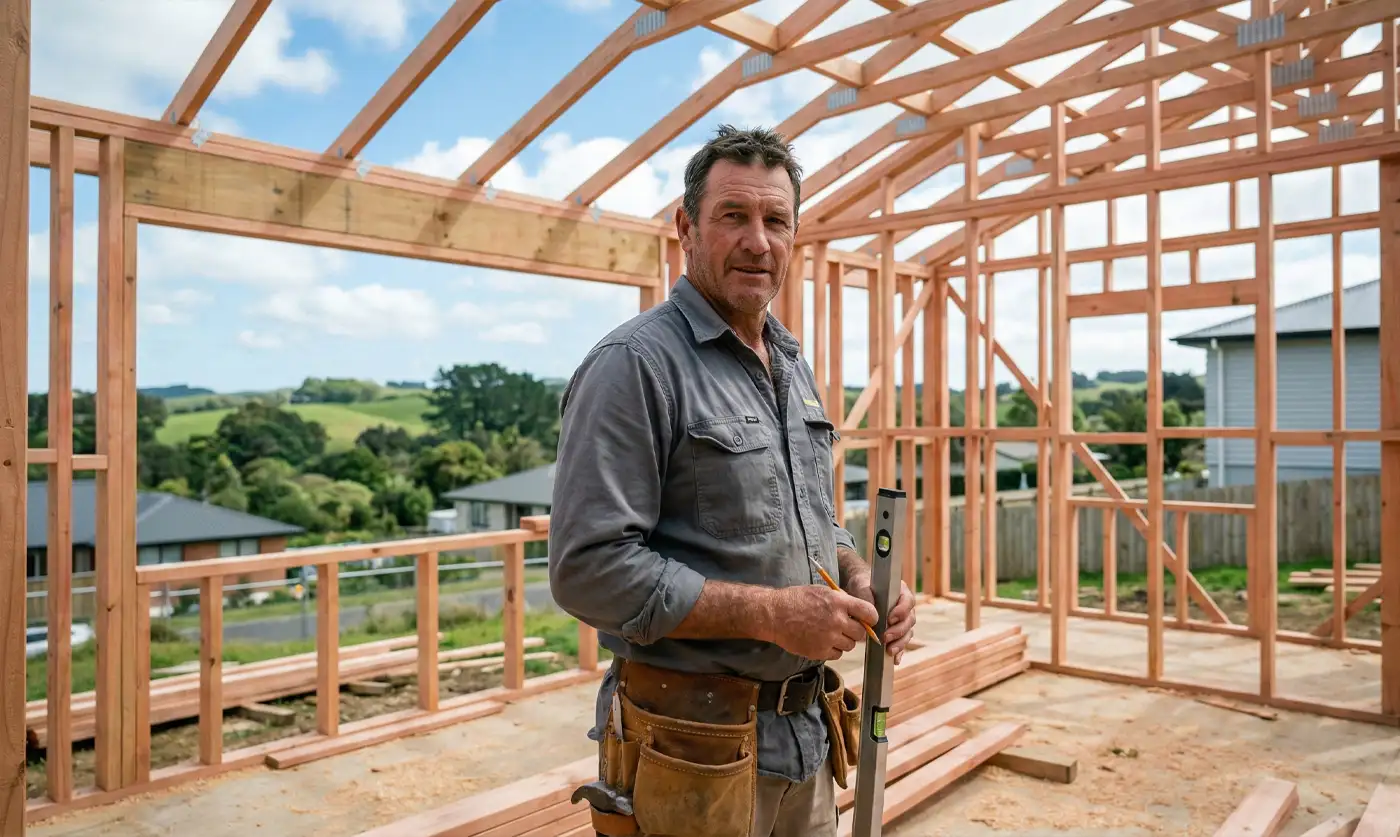
Finding the right builder in Whangārei can feel overwhelming, but it doesn’t have to be. Whether you’re planning a new home, a major renovation, an extension, or new deck, the builder you choose will have a significant impact on the outcome, your experience during the project, and the value of your property for years to come. This guide covers what to look for, what questions to ask, and what to watch out for when choosing a builder in Whangārei
Local Whangarei Builders


Choose the Business + SEO package to List your Building Company here
Licensing: The Non-Negotiable Starting Point
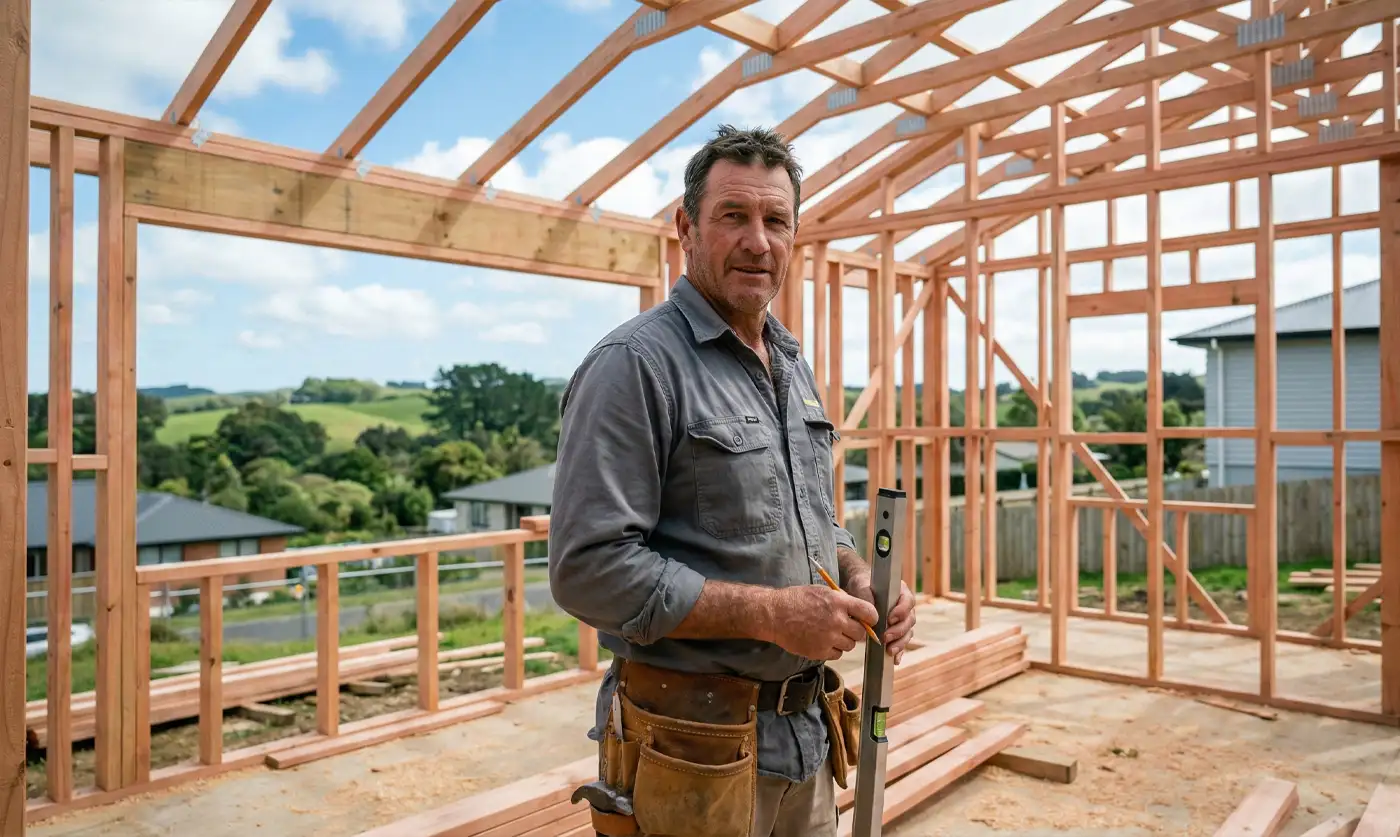
In New Zealand, anyone carrying out or supervising residential building work must be a Licensed Building Practitioner (LBP). This is a legal requirement, not just a recommendation. The LBP scheme was introduced to ensure that the people responsible for critical building work are properly qualified and accountable.
LBPs are licensed across different classes of work, including design, carpentry, roofing, external plastering, bricklaying and blocklaying, foundations, and site. For most residential building projects, you’ll want a builder licensed in carpentry or site, as these cover the core structural and weathertightness work.
You can verify any builder’s LBP status on the Building Practitioner’s Board website at lbp.govt.nz. If a builder can’t give you their LBP number, or is reluctant to do so, that’s a serious red flag. Licensed builders can be held accountable by the Board if their work is deficient, which gives you real protection that you simply don’t have with an unlicensed operator.
For restricted building work (the structural and weathertightness elements of a home), only LBPs can carry out or supervise the work. They’re also required to provide you with a Record of Work on completion, which documents what they did and certifies it was done to the required standard.
Insurance and Consumer Protection
Before any work begins, make sure your builder carries current public liability insurance. This protects you if something goes wrong during the build, like damage to your property, a neighbouring property, or injury to someone on site. Ask for proof and check that the coverage level is appropriate for the size of your project.
Builders working under the Registered Master Builders scheme or as members of the New Zealand Certified Builders Association (NZCB) offer additional consumer protection worth knowing about.
Registered Master Builders can provide a Master Build Guarantee, which covers you for up to ten years against defects in workmanship and materials, as well as loss of deposit if the builder fails to complete the work. This is one of the strongest warranties available in the New Zealand building industry.
NZCB members can offer a Halo Guarantee, which provides similar protection. Both schemes require builders to meet specific criteria around experience, financial stability, and quality standards.
Neither guarantee is compulsory, but they give you a meaningful safety net that’s worth paying attention to when comparing builders.
Why Local Experience Matters in Northland
Building in Whangārei and Northland comes with specific conditions that a locally experienced builder will understand far better than someone from outside the region.
Our high humidity is one of the most significant factors. Moisture management is critical in Northland construction. Builders who understand our climate will specify appropriate wraps, vapour barriers, and ventilation, and will be careful about how and when concrete is poured and how long building materials are left exposed to the elements.
Coastal properties from Whangārei Heads to Tutukaka, Ngunguru to Langs Beach face additional challenges. Salty air accelerates corrosion on fixings, flashings, and structural steel. A builder experienced with coastal Northland construction knows to specify marine-grade fixings and stainless fasteners in these environments, and to use cladding systems that hold up to salt exposure over time. Cutting corners here shows up within a few years.
Northland’s clay soils also require careful attention at the foundation stage. Clay can shrink and swell significantly with moisture changes, which affects foundation design. A good local builder will work with a geotechnical engineer when the site conditions call for it, rather than treating every site the same.
Many Whangārei properties also sit in areas subject to flooding or steep site challenges. Local builders know the Whangārei District Council’s requirements around these issues and how to design and build accordingly.
Consents and the Building Process
Most significant building work in Whangārei requires a building consent from Whangārei District Council. This applies to new builds, most extensions and additions, structural alterations, and many renovation projects. A good builder will be clear about what requires consent and what doesn’t, will manage the consent application process on your behalf, and will ensure the work is inspected at the required stages.
Don’t be tempted by builders who suggest skipping consent to save time or money. Unconsented building work creates serious problems when you come to sell, can void your home insurance, and may need to be removed or rebuilt at your expense. It’s not a shortcut worth taking.
Some projects also require resource consent, particularly if they involve earthworks, are in a flood-prone area, or affect trees or natural features. A locally experienced builder will know when this applies and can direct you to the right advice.
Working with Architects and Designers
For a new home or a substantial renovation, you’ll often be working with an architect or building designer alongside your builder. How this relationship works depends on your project and how you structure it.
Some builders have in-house design capability or work with preferred designers. Others are happy to work from plans you’ve developed with your own architect. Either approach can work well.
What matters is that the builder is brought into the conversation early enough to provide input on buildability, cost, and any practical issues with the design before plans are finalised. A builder who only sees the plans when they’re ready to price can give you a more accurate quote, but early involvement often saves money by catching design elements that are expensive to build before they’re locked in.
Make sure you’re clear on who is responsible for what. On a design-and-build contract, the builder typically takes responsibility for both design and construction. On a traditional contract where you’ve engaged your own designer, responsibility is split, so it’s important that the roles and handover points are clearly documented.
Types of Building Contracts
Understanding the main contract types helps you make an informed decision about how to engage your builder.
A fixed-price contract gives you a set price for the completed work. This offers certainty and protects you from cost blowouts, provided the scope of work is clearly defined upfront. Any changes you make during the build will typically attract a variation charge, so it’s important to finalise your plans as thoroughly as possible before signing.
A cost-plus contract means you pay the actual cost of labour and materials, plus an agreed margin for the builder. This can work well for complex projects where the full scope is hard to define in advance, but it puts the cost risk on you rather than the builder. Good record-keeping and regular cost reporting from the builder are essential under this arrangement.
Whatever contract type you use, make sure everything is in writing before work starts. A written contract should cover the scope of work, plans and specifications, the contract price or pricing method, a payment schedule, how variations will be handled and priced, the timeline, what happens if there are delays, warranties, and how disputes will be resolved. The New Zealand Certified Builders Association and Registered Master Builders both provide standard contract templates that are widely used in the industry.
Getting and Comparing Quotes
For any significant project, get at least three quotes. This gives you a realistic sense of the market rate and lets you compare different approaches.
A solid quote should include a clear description of all work to be carried out, the materials and specifications to be used, what’s included and what’s excluded, the timeline, the payment schedule, and any assumptions the builder has made. Vague, one-page quotes are a warning sign. If a quote doesn’t specify materials or methods, you have no way of comparing it fairly with others, and you have no basis for holding the builder to a standard once work begins.
Be cautious of quotes that are significantly lower than others. In building, a low quote usually means something has been left out, cheaper materials are being substituted, or the builder is underpricing to win the job with the intention of making it up through variations. None of these scenarios end well for you.
Payment schedules for building work typically tie payments to progress milestones, such as consent approval, foundations complete, framing complete, enclosed, and practical completion. This is a reasonable structure. Be cautious of builders who ask for large upfront payments that aren’t tied to measurable progress.
Questions to Ask Before You Commit
Before hiring any builder, ask:
- Are you a Licensed Building Practitioner? What’s your licence number and class?
- Are you a member of Registered Master Builders or NZCB?
- Do you offer a guarantee? What does it cover and for how long?
- Do you carry current public liability insurance? Can I see proof?
- How long have you been building in Whangārei and Northland?
- Have you built similar projects to mine? Can I see examples?
- Can you provide references from recent clients?
- Who will actually be on site managing the day-to-day work?
- Do you use subcontractors, and if so, how do you manage them?
- How do you handle variations to the scope of work?
- What’s your current availability and what’s a realistic timeline for my project?
- How do you communicate with clients during a build?
- What does your payment schedule look like?
- What happens if there are delays?
That last question about who’s actually on site is worth following up carefully. Some builders price and win jobs but hand day-to-day supervision to a site manager or subcontractors. There’s nothing wrong with this, but you want to know who you’re dealing with and how experienced they are.
Red Flags to Watch For
Avoid builders who:
- Can’t provide a current LBP number
- Suggest skipping building consent
- Can’t provide proof of current insurance
- Are vague about materials or specifications in their quote
- Ask for large upfront payments
- Pressure you to sign quickly
- Can’t provide references from recent projects
- Are dismissive of questions about process, warranties, or qualifications
- Offer prices significantly below every other quote without a clear explanation
Also pay attention to how a builder communicates during the quoting process. If they’re slow to return calls, vague with information, or seem disorganised before you’ve even signed anything, that’s a reasonable preview of what the build will be like.
Checking References and Past Work
Always ask for references and follow through on contacting them. Questions worth asking previous clients include:
- Were you happy with the finished result?
- Did the project stay on budget?
- Was it completed on time, and if not, how were delays handled?
- How was communication during the build?
- Were there any problems, and how did the builder deal with them?
- Did you receive all your documentation, including the Record of Work?
- Would you hire them again?
If possible, visit a completed project that’s a few years old. This gives you a realistic sense of how the work has held up and whether the finishes and detailing have aged well.
Understanding Your Documentation
When your build is complete, there are several documents you should receive. Make sure you get all of them.
A Code Compliance Certificate (CCC) from Whangārei District Council confirms the work has been inspected and meets the building code. Without this, you may have difficulty selling or insuring the property. Your builder should manage the application for this as part of the normal completion process.
A Record of Work from your LBP documents the restricted building work carried out and confirms it was done in accordance with the consent. This is a legal requirement for your builder to provide.
If your builder is a Registered Master Builder or NZCB member and you’ve taken out a guarantee, you’ll also receive the guarantee documentation. Keep this safe as it transfers to subsequent owners if you sell.
You should also receive consent documentation, inspection records, producer statements for any specialist work, and any warranties on materials, appliances, or systems installed during the build.
What Good Building Work Looks Like
When the work is complete, you should see:
- Framing that’s plumb, square, and true
- Cladding installed correctly with all flashings properly integrated
- Joinery that opens, closes, and seals correctly
- Even, consistent finishes on plastered or painted surfaces
- Tidy, accurate tiling and wet area work
- No visible gaps, cracks, or inconsistencies in the finished surfaces
- All fixtures, fittings, and services functioning correctly
- A clean site with all waste and materials removed
- Full documentation in your hands at practical completion
A good builder won’t consider the job finished until you’ve done a walkthrough together and any outstanding items have been addressed.
After the Build
Once your project is complete, keep a record of what was built, what materials were used, and who the subcontractors were for things like plumbing and electrical. This information is useful for maintenance and for any future building work on the property.
If issues arise after completion, contact your builder promptly. Most reputable builders will address genuine defects without argument, particularly while the guarantee period is active. If you can’t resolve an issue directly, your guarantee provider (Master Build or Halo) has a disputes process. The Building Practitioners Board also handles complaints about LBPs if the issue relates to the quality of their licensed work.
For ongoing maintenance, have your home inspected every few years, particularly the roof, cladding, and any areas where water could penetrate. Catching small issues early is always far less expensive than dealing with them once moisture damage has taken hold, which in Northland’s humid climate can happen faster than you might expect.


Leave a Reply
You must be logged in to post a comment.