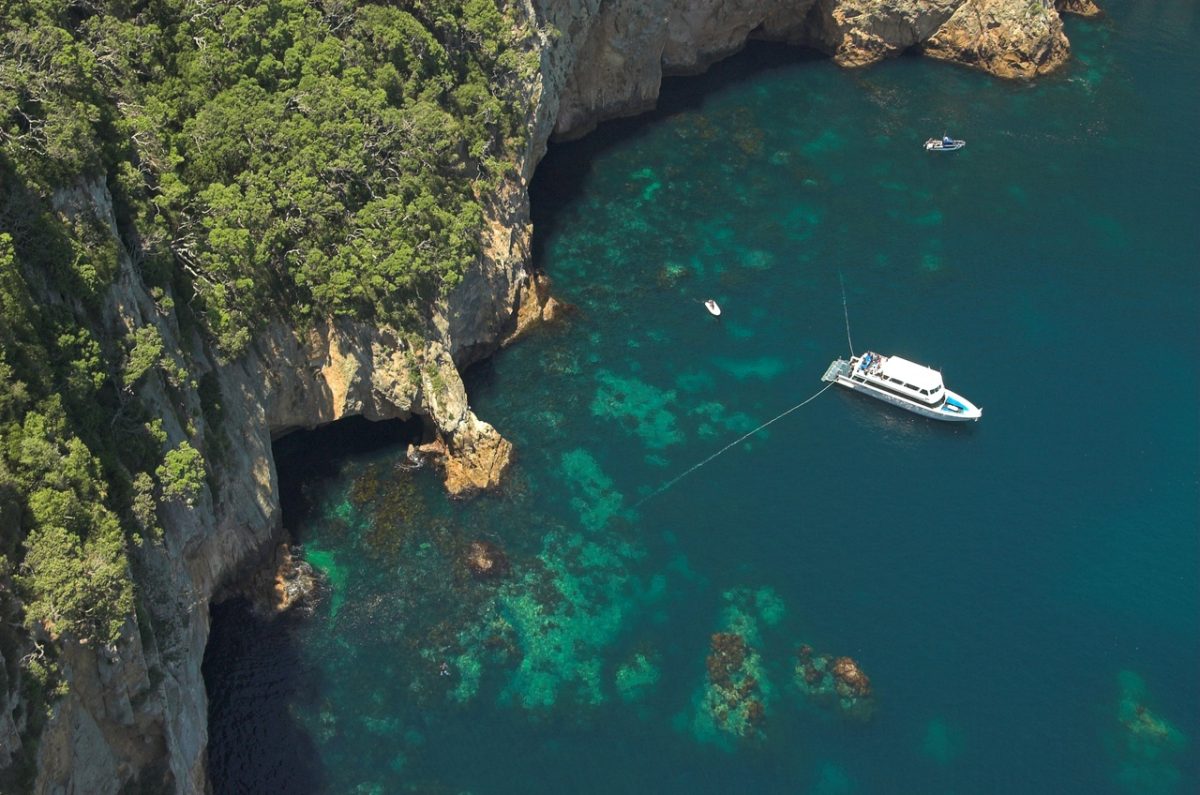
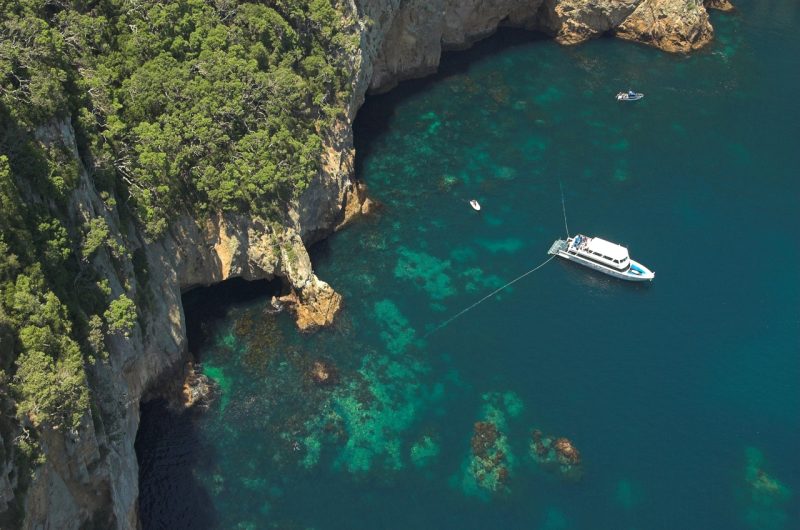
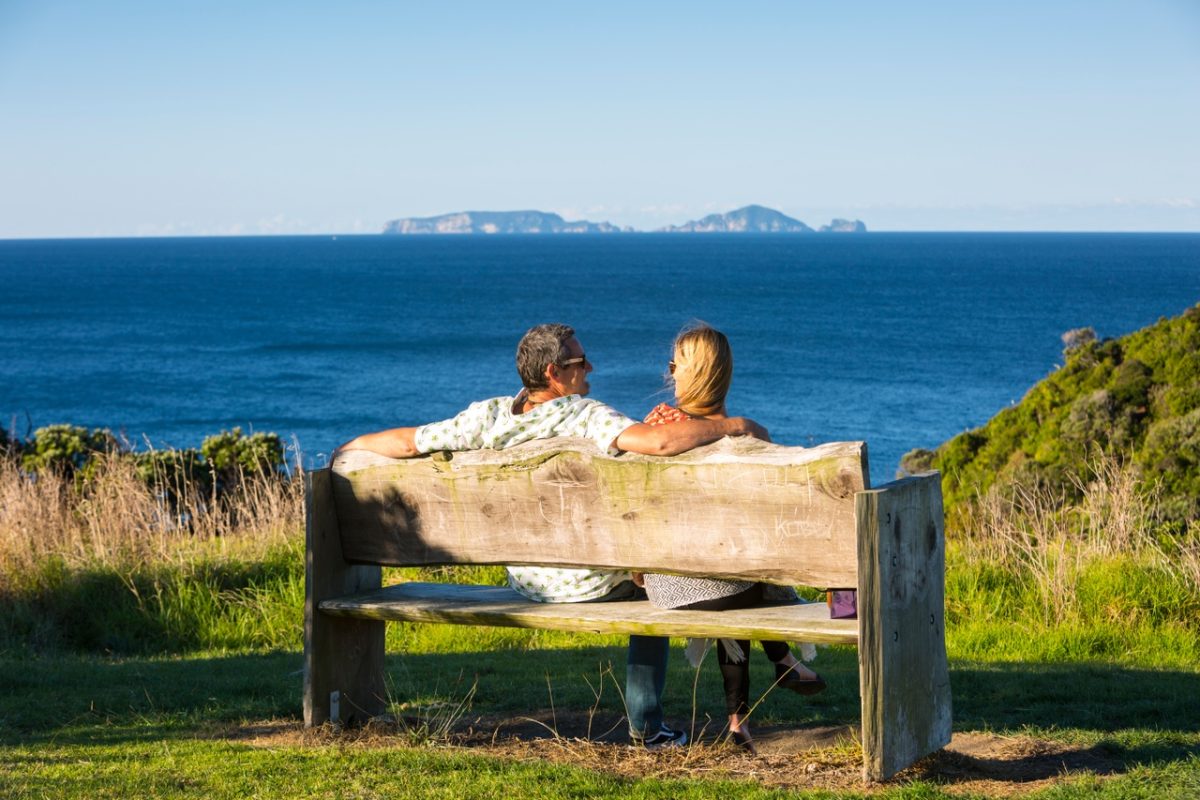
One of the world’s great dive destinations sits just 24 kilometres off the Tutukaka Coast, close enough to see on a clear day from the right vantage point, yet most people in Whangarei couldn’t tell you the last time they went, or whether they’ve been at all. That’s a mistake worth correcting. A day trip to the Poor Knights is one of the genuinely great experiences available in Northland, and it doesn’t require a diving certification, a wetsuit of your own, or any prior experience in the ocean. You just need to book a spot on a boat and show up at Tutukaka Marina.
What the Day Actually Looks Like
Most operators depart from Tutukaka Marina mid-morning, with most trips returning to the marina by mid to late afternoon. The boat ride out takes around 45 minutes to an hour depending on conditions and the vessel. Operators are upfront about what to expect on the crossing, and if there’s a swell running they’ll tell you before you board and point you toward the crew if you start feeling unwell. It’s well worth taking seasickness medication before you leave if you have any doubt, because a rough crossing is far more manageable with medication than without. On any given crossing you might also spot dolphins escorting the boat, flying fish, or seabirds working the surface, so it’s worth keeping your eyes open rather than staring at the horizon.
Once you arrive, the skipper selects the first site based on conditions and what’s on board. Wind, swell direction, and the mix of divers and snorkellers all factor into the call, and one side of the islands is generally more sheltered than the other, which gives the skipper options even on days when the weather isn’t playing along. Most trips include at least one or two sessions in the water at different sites, with time in between for lunch, a rest, and the highlight of most trips: a visit to Rikoriko Cave. Most operators also do a circumnavigation of the islands by boat, with the skipper walking passengers through the history of the Poor Knights, the volcanic origins, the Ngāti Wai story, the raid of the early 1820s, and the declaration of tapu that has kept the islands uninhabited and protected ever since. Today the islands remain off-limits to the public, accessible only to scientists with special DOC permits, which goes a long way toward explaining why the ecosystem above the waterline is in such extraordinary condition.
Rikoriko Cave
No trip to the Poor Knights is complete without it. Rikoriko Cave sits on the northwest side of Aorangi Island, hidden from view until you’re almost on top of it. The entrance opens up gradually as you approach by boat, and then the full scale of the place hits you. The cavern measures 130 metres long and 80 metres wide, with a ceiling rising 35 metres above the water. It extends 26 metres below the surface. By volume, it is widely considered the largest sea cave in the world.
The name Rikoriko means waning light, twilight, or dancing light in Māori, the last referring to the patterns sunlight makes when it reflects off the water’s surface onto the cave walls and ceiling. The light from the entrance fades toward the back of the cave, and the water takes on an extraordinary clarity, with visibility often reaching 35 to 45 metres inside the cave, better than most of the open water around the islands. The acoustics are something else entirely. The shape of the cave creates a natural chamber effect, and skippers typically demonstrate it with a shout or a horn blast. The echo is remarkable enough that the boat tends to go quiet for a moment afterwards. Neil Finn has performed here, along with Gregorian chants, opera singers, and electronic acts, and it’s easy to understand why musicians are drawn to it.
The cave has its own wartime story too. During the Second World War, a Japanese submarine reportedly sheltered inside Rikoriko for two weeks while undergoing repairs, hidden from the air and sea by the cave’s vast interior. Whether or not that’s easy to believe, standing inside the cave makes it entirely plausible.
Below the waterline, the cave has a distinct ecosystem unlike anything else at the Poor Knights. With almost no direct light reaching the walls, kelp is entirely absent. Deep-water species that would normally be found at 200 metres, including cup corals, grow here at 10 to 15 metres, tricked by the low light into behaving as though they are far deeper than they are. The seascape is stark and moonlike, and for divers it offers a completely different experience from the rest of the Poor Knights.
Snorkelling the Poor Knights
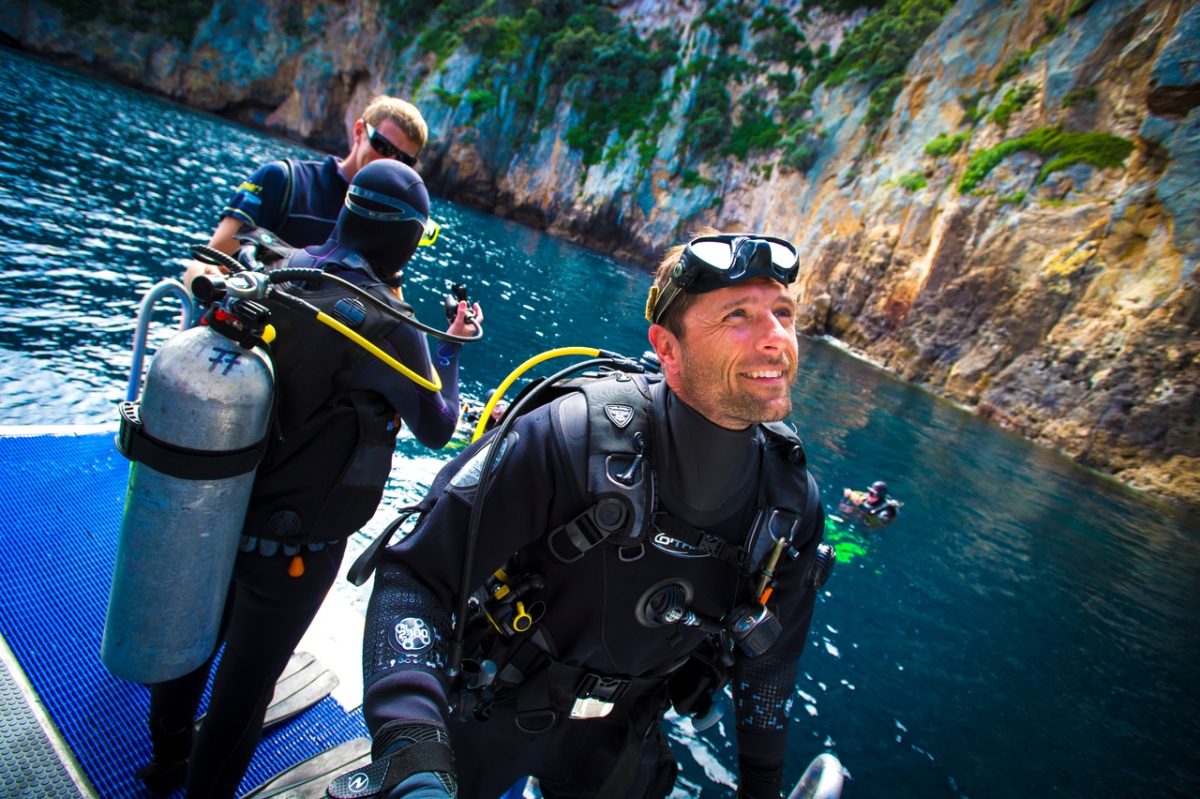
You don’t need to be a diver to get something extraordinary out of a day at the Poor Knights. The snorkelling here is world class in its own right, and operators carry crew members both in the water and on the boat to keep an eye on everyone, so you’re well looked after regardless of your experience level.
Most operators provide wetsuits, masks, and fins, so check what’s included when you book rather than assuming you need to bring your own gear. Once you’re in the water, the fish life is the first thing that gets you. You may find yourself surrounded by schools of blue maomao moving through the water in formations large enough to block out the light, and the sheer number of fish tends to catch even seasoned snorkellers off guard. Swim out from the boat and then turn back to look underneath it and you’ll often find large fish sheltering in the shadow below, snapper and kingfish that have no reason to move away and no interest in doing so. Even on days when the conditions on the crossing were lively, the visibility in the water around the islands tends to hold up well.
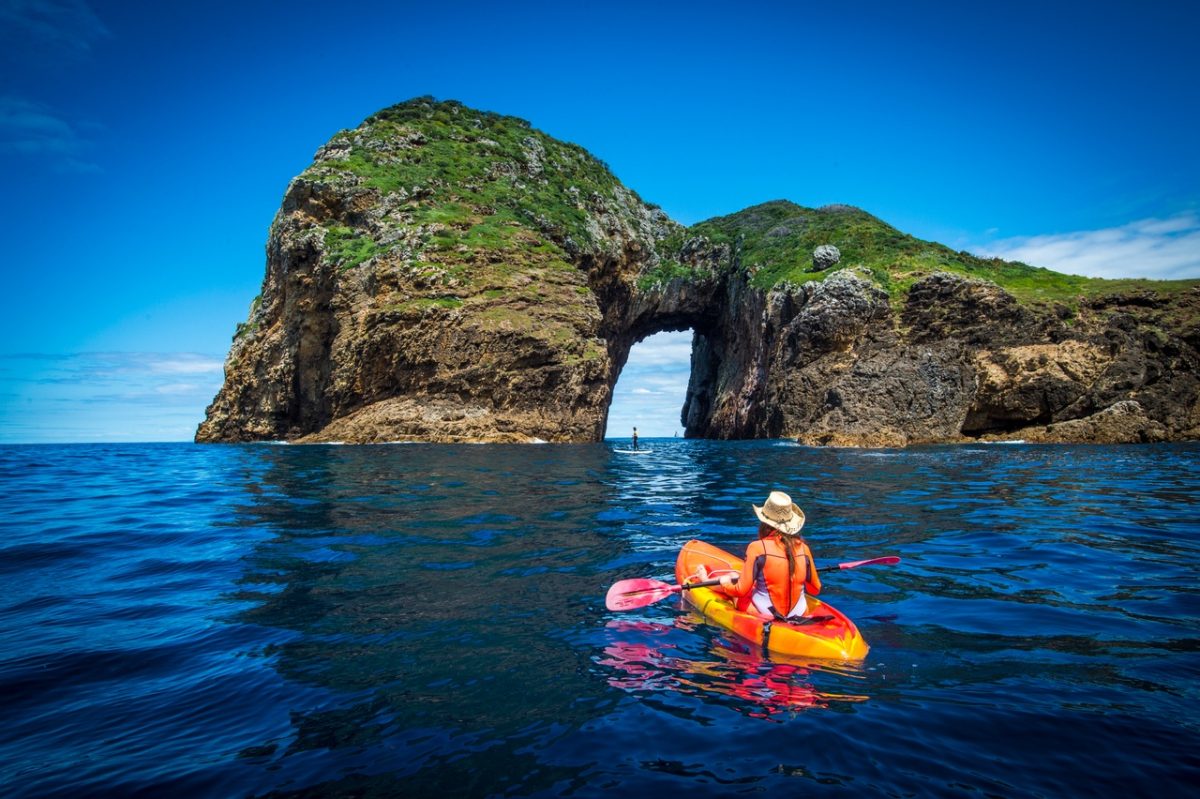
The water clarity is what makes it genuinely special. The volcanic walls drop away below you, and you can watch the deeper world without entering it, which is a strange and impressive thing to experience even for people who have snorkelled elsewhere. The arches are accessible to snorkellers as well as divers, with shafts of light coming through gaps in the rock and fish lining the walls on either side. Paddleboards and sea kayaks are often available between water sessions, allowing you to explore the cave entrances and rocky coastline at your own pace. In spring, keep an eye out for seals, which are curious and occasionally join snorkellers in the water.
Diving the Poor Knights
For certified divers, the Poor Knights delivers on every level of the reputation that precedes it. Jacques Cousteau rated it among the top ten dive sites in the world, and the reasons become obvious the moment you go below the surface. There are more than 50 named dive sites around the islands, which means operators can always find somewhere sheltered and worthwhile regardless of wind direction or swell. Around 120 species of fish have been recorded here, and the combination of the warm East Auckland Current with cooler temperate water creates conditions where tropical and temperate species exist side by side.
The underwater topography is defined by the islands’ volcanic origins. Sheer walls drop from the surface to sandy floors 100 metres below in places, sea caves tunnel through the cliff faces, and wide archways create swim-throughs at various depths. Many of the subtropical species found here exist nowhere else in New Zealand, including spotted black groper, mosaic moray, and Lord Howe coralfish.
Key Dive Sites
Blue Maomao Arch is the most photographed site at the Poor Knights and the one most divers want to visit first. Situated in the Labrid Channel, the arch sits low in the water with its top just breaking the surface. When sunlight comes through the gaps in the rock, shafts of light filter down through the water while thousands of blue maomao and two-spotted demoiselles line the walls on either side. With a good current bringing in nutrients, the fish stack up in numbers that are genuinely hard to describe.
Northern Arch is a more serious proposition. The arch cuts entirely through a rocky point with its base sitting at 38 metres, making it suited to more experienced divers. Schools of blue maomao fill the arch from top to bottom and the scale of the structure is impressive.
Middle Arch is the versatile option, suitable for all levels and excellent for swim-throughs. At the back of the arch near Cleanerfish Bay, deeper passages sit at 19 to 23 metres for those who want to push further into the reef.
Nursery Cove and South Harbour are the go-to sites for novice divers and those returning to diving after a break. The conditions are sheltered, the depths forgiving, and there’s still plenty of marine life to reward the effort.
Brady’s Corner / Meditation Wall is a wall dive with exceptional sponge and gorgonian coral coverage, and a site where eagle rays and unusual moray species are regularly photographed.
Cleanerfish Bay is known for smooth stingrays that gather in the sandy areas between reef structures and are often approachable at close range.
Marine Life
Rays are a signature animal of the Poor Knights and are present year-round, with bull rays, long-tail stingrays, and short-tail stingrays all recorded in the reserve. In summer they gather in larger numbers to mate, and those aggregations can in turn attract orca into the area, though encounters with either are a bonus rather than a certainty.
Beyond the rays, the reserve supports schools of trevally, snapper, and kingfish, moray eels of multiple species, nudibranchs across the rocky surfaces, and sponge gardens in the deeper shaded sections. Larger pelagic species including whale sharks, manta rays, and sunfish pass through seasonally, and dolphins are regularly spotted around the islands. What you encounter on any given day depends on the season, the conditions, and a fair bit of luck, but the Poor Knights consistently delivers on marine life in a way that few places can match.
Conditions and Visibility
Visibility ranges from 15 to 30 metres year-round and occasionally exceeds 40 metres. The clearest conditions are typically between May and September, when cooler winter water is at its most transparent. Summer brings warmer water but also more plankton, which can reduce visibility slightly, though the trade-off is more fish activity and a higher chance of pelagic encounters. Most divers use a 7mm wetsuit year-round. A 5mm is manageable in summer, but the 7mm provides more comfort across the full range of conditions and means you can stay in the water longer without thinking about the cold.
Try-Dives for Beginners
For those who have never dived before, try-dives are available with most operators. Instructors handle all the technical setup and accompany beginners throughout the dive. The shallower sites at the Poor Knights are well suited to first-time diving, and it’s not unusual for people who came along planning to snorkel to complete a try-dive and sign up for their open water certification when they get home.
On the Boat
Most operators provide wetsuits, masks, and fins as part of the trip, though it’s worth confirming what’s included when you book as this varies between operators. Lunch is provided on most full-day charters, and boats are equipped with hot showers for rinsing off after your time in the water. Between water sessions, most operators take the boat on a circumnavigation of the islands, with the skipper walking passengers through the history of the Poor Knights. It’s a good way to decompress between sessions and understand what makes this place significant beyond the diving.
Choosing an Operator
All Poor Knights trips depart from Tutukaka Marina. Group size matters when choosing an operator, as smaller groups typically mean a more personal experience and more flexibility on site selection. Check what’s included in the price, as wetsuits, equipment, lunch, and guided dives vary between operators. If anyone in your group is uncertified, confirm whether try-dives are available before booking. Vessel type is also worth considering, as larger boats offer more stability on a rough crossing while smaller boats can access tighter spots around the islands.
When to Go
Summer (December to February) brings the warmest water and the highest chance of encountering larger pelagic species including manta rays and whale sharks. Stingray aggregations peak during these months, which brings orca into the area. Book well in advance as this is the busiest period.
Autumn (March to May) is widely considered by experienced divers to be one of the best windows. The water is still warm from summer, visibility begins to improve, and the crowds ease off considerably. Early April is a particularly good time, with settled conditions and marine life still active from the summer months.
Winter (June to August) brings the clearest visibility of the year, often exceeding 30 metres. Cooler water means a good wetsuit matters more, but the diving is exceptional and fewer boats at the Poor Knights means a quieter, more personal experience.
Spring (September to November) sees water temperatures rising, marine activity picking up, and seals often present in the water. It can be windier than other seasons, which actually creates good diving conditions on the lee side of the islands.