The Hundertwasser Art Centre: Whangarei’s Architectural Marvel
As someone who’s watched this project unfold over nearly three decades, I can tell you that the Hundertwasser Art Centre with Wairau Māori Art Gallery is far more than just another tourist attraction. This vibrant, undulating building at Whangārei’s Town Basin represents one of the most contentious, celebrated, and ultimately triumphant cultural projects in New Zealand’s recent history. Opening its doors in February 2022, it stands as the last authentic Hundertwasser building in the world – a distinction that carries tremendous weight in international art and architecture circles.
The Artist Behind the Vision
Friedensreich Hundertwasser wasn’t just passing through Northland when he sketched his initial designs in 1993. This Austrian-born artist, architect, and environmental pioneer spent 30 years of his life in the Bay of Islands, becoming a New Zealand citizen in 1986. He lived near Kawakawa at his property in Kaurinui, where he transformed a dairy farm into a thriving forest by planting more than 100,000 native trees. Wherever he travelled in the world, Hundertwasser kept his watch set to New Zealand time – that’s how deeply connected he was to this place.
The artist famously despised straight lines, calling them “the devil’s tools,” and believed buildings should exist in harmony with nature. His philosophy of “architecture doctor” meant he preferred to “cure” existing buildings rather than construct new ones. When invited by the Mayor of Whangārei in 1993 to select a building suitable for transformation, Hundertwasser chose the former Northland Harbour Board building at the Town Basin, sketching his vision for a shimmering tower, undulating walls, and an afforested roof that would bring nature into the heart of the city.
A Journey of Controversy and Determination
The path from those 1993 sketches to the 2022 opening was anything but smooth. Initially, the project stalled because the building was owned by the Northland Regional Council, who weren’t interested in selling. After Hundertwasser’s death in 2000, the idea lay dormant until Whangārei District Council purchased the building in 2004 and revived the proposal in 2007.
What followed was a roller coaster of council debates, public meetings, and passionate arguments that divided the community for years. In 2014, when the council voted to remove the project from its Long Term Plan, it seemed the dream was dead. But that’s when something remarkable happened – a group of locals standing in the council lobby that night decided to build it themselves, forming the Prosper Northland Trust.
The 2015 referendum became a defining moment for Whangārei. Three options were presented: build the Hundertwasser Art Centre, create a maritime museum, or demolish the building entirely. When the results came in, 13,726 people (51%) voted for Hundertwasser, while 7,876 (29%) voted for demolition and 5,478 (20%) for the maritime museum. With a 49% turnout – comparable to local body elections – the community had spoken decisively.
The Building as Art
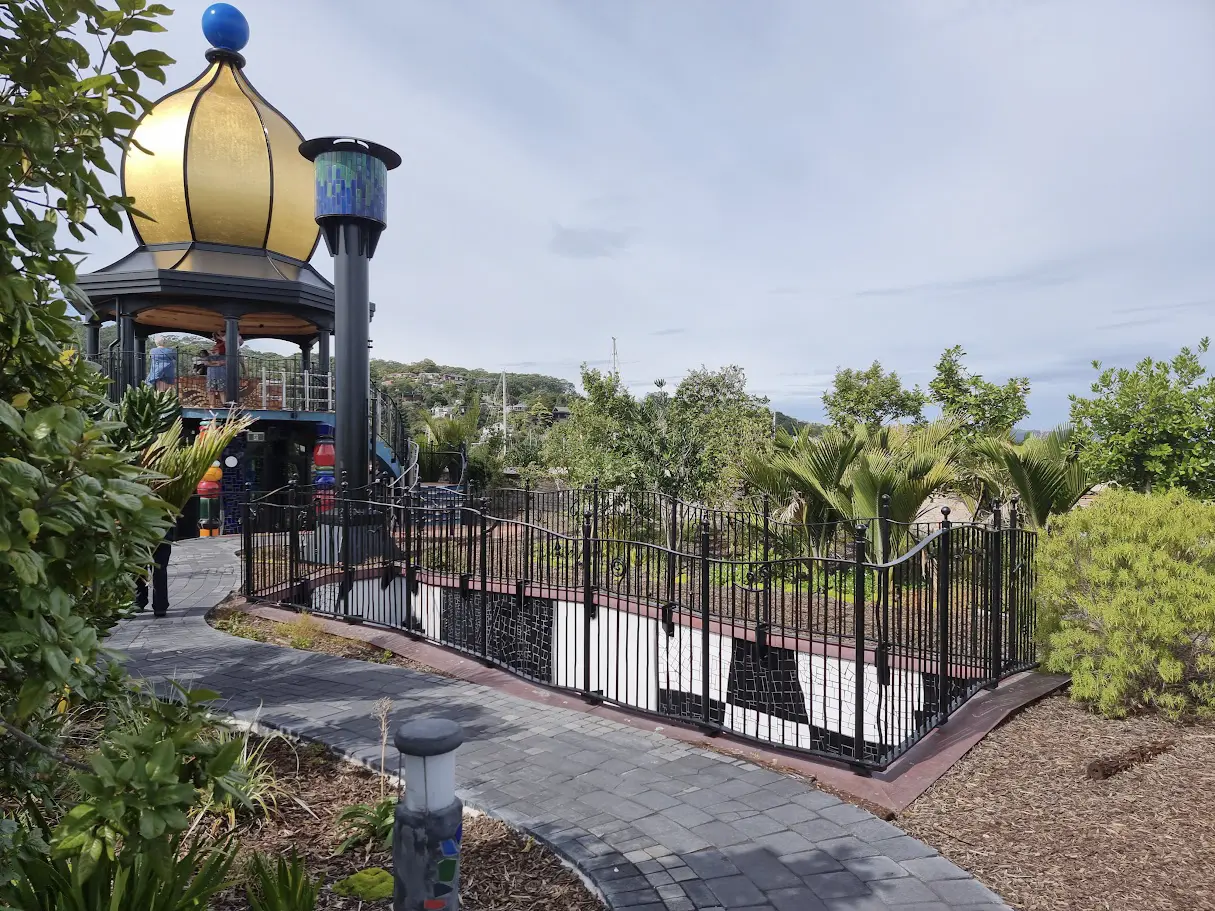
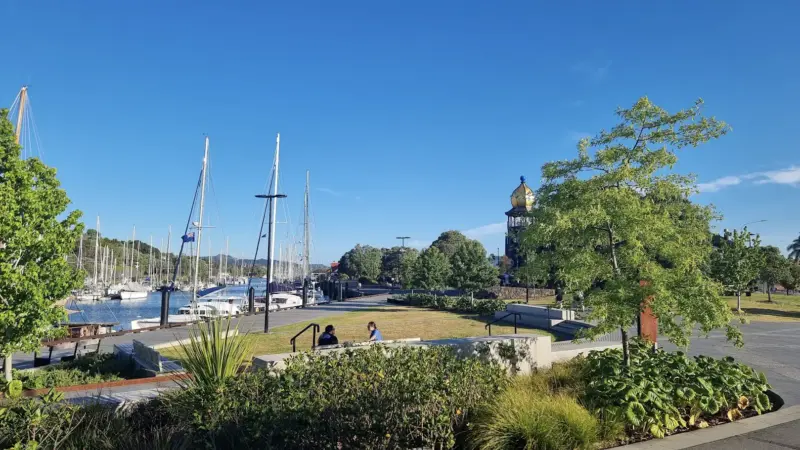 Walking up to the Hundertwasser Art Centre today, you can’t help but smile at its playful defiance of architectural conventions. The building features Hundertwasser’s trademark undulating floors (deliberately uneven “to make you aware you’re walking”), colourful ceramic columns, irregular windows, and that spectacular eight-metre-high golden cupola topped with a 3.5-tonne gold leaf crown. Every surface tells a story through vibrant mosaics, each tile carefully placed by local craftspeople who spent years mastering Hundertwasser’s unique techniques.
The structure incorporates 40,000 recycled bricks, 1,600 cubic meters of recycled native timber from the original building, 5,000 recycled pavers, and 3,000 square meters of locally crafted tiles. This wasn’t just construction—it was resurrection, transformation, and creation all at once. Local plasterers, tilers, and bricklayers had to learn entirely new skills to faithfully realize Hundertwasser’s vision, with German architect Heinz Springmann (who worked closely with Hundertwasser on previous projects) and the Hundertwasser Non-Profit Foundation in Vienna ensuring authenticity at every step.
Two Galleries, One Vision
The centre spans two levels with 1,638 square meters of floor space. The top floor houses 80 original Hundertwasser artworks – the largest collection outside Vienna, including paintings, graphics, tapestries, and architectural models. These works are rotated regularly through an arrangement with the Vienna museum, ensuring fresh exhibitions for repeat visitors.
The ground floor is home to the Wairau Māori Art Gallery, occupying 173 square meters. This was a non-negotiable requirement from Hundertwasser himself, who insisted any centre bearing his name must include space for Māori art. The name “Wairau” is particularly meaningful – it’s the Māori translation of “one hundred waters,” the same meaning as the German “Hundertwasser.” This is New Zealand’s first and only public gallery dedicated exclusively to contemporary Māori art, with exhibitions curated by professional Māori curators. It operates independently with its own charitable trust board, ensuring authentic representation and autonomous operation.
The Living Roof
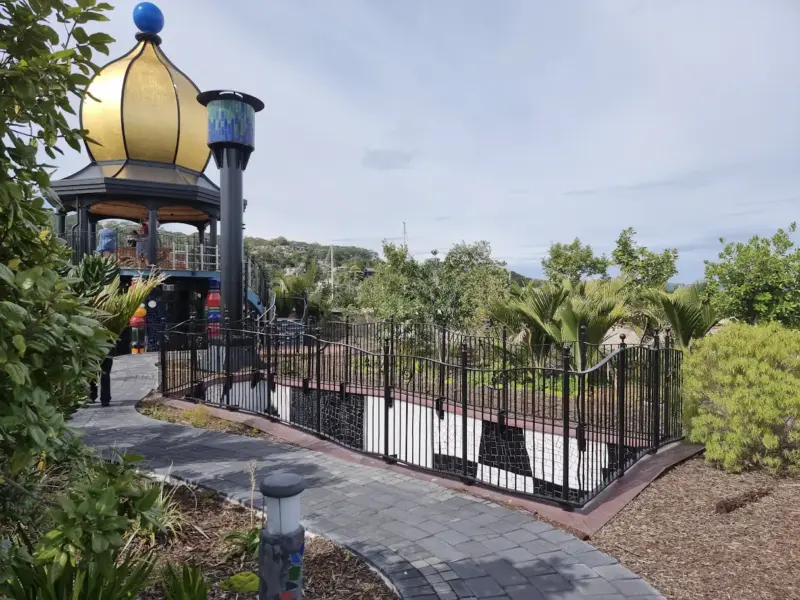
Perhaps the most spectacular feature is the afforested roof—the largest in the Southern Hemisphere at approximately 980 square meters. This isn’t just a green roof; it’s a thriving ecosystem featuring native Northland plants, including rare and endangered species from offshore islands. The forest plantings are deliberately random and wild, allowing spontaneous vegetation to self-seed as it would in nature. A winding staircase leads visitors up to this rooftop oasis, where seating areas offer 360-degree views of the Town Basin marina and Whangārei Harbour.
The roof embodies Hundertwasser’s ecological philosophy – what he called “tree tenants” and “a peace treaty with nature.” Local horticulturists and gardeners from a Tutukaka nursery supplied and planted the native trees and shrubs, creating a living artwork that changes with the seasons and continues to evolve.
More Than Galleries
Beyond the exhibition spaces, the centre includes a 166-square-meter café and restaurant with a 52-square-meter terrace overlooking the marina (Aqua Café has become a destination in its own right), a learning centre for educational programs, a theatre for presentations and performances, and a thoughtfully curated gift shop. The building itself functions as an educational resource where students can study art, architecture, and ecology in a living laboratory.
Public guided tours run Thursday through Sunday at 11am, offering insights into both the art and the building’s unique features. Private tours can be arranged for groups, and the centre offers various educational programs for schools, making it a valuable resource for the region’s young people.
Visiting the Centre
Located at 81 Dent Street in the Town Basin, the centre is open seven days a week. General admission is $30 for adults, with concessions at $20 for seniors (65+) and Whangārei District locals (proof of address required). Children under 15 enter free with a paying adult. Access to just the afforested roof or Wairau Māori Art Gallery alone is $10.
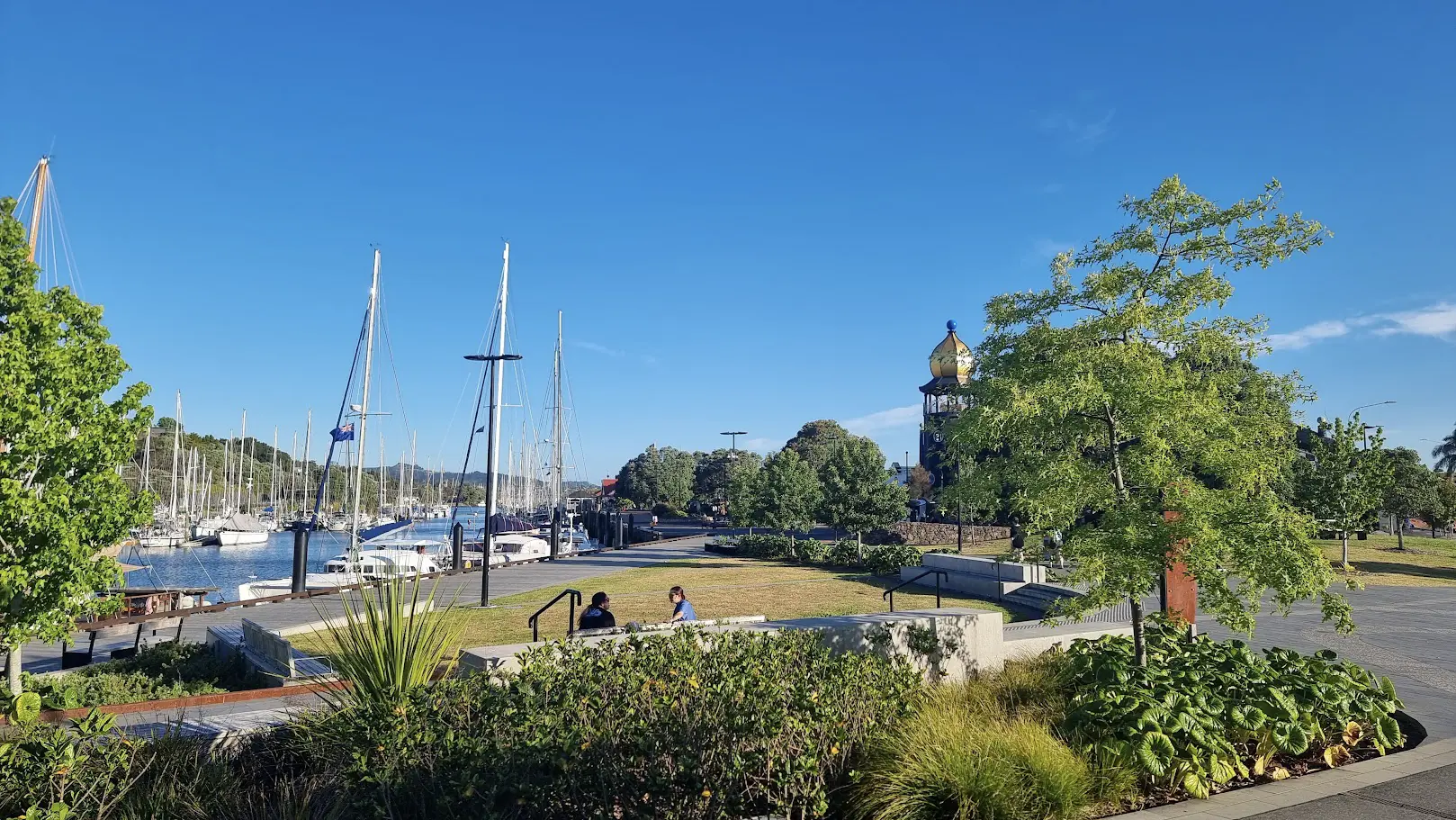
The Town Basin location means the centre is surrounded by cafés, restaurants, and shops, making it easy to combine your visit with a meal or extended exploration of the waterfront area. The Saturday morning artisans’ market adds another dimension to the precinct, and the Hatea Loop walkway connects everything in a pleasant harbourside stroll.
The Bigger Picture
Beyond its role as a tourist attraction, the Hundertwasser Art Centre represents something profound about community determination and the power of art to transform places. This is the last authentic Hundertwasser building in the world—the Hundertwasser Foundation in Vienna has made it clear there will be no more. That makes Whangārei the final keeper of this particular flame, the last place on Earth where Hundertwasser’s vision of architecture as healing, as harmony with nature, as pure creative joy, has taken physical form.
The centre has already won recognition, receiving a Silver Qualmark award for quality and sustainability just as it opened. It’s been featured in international architecture publications and has put Whangārei on the global cultural map in a way nothing else could have achieved.
A Living Legacy
Friedensreich Hundertwasser believed buildings should be living things that continue to grow and change. True to this philosophy, the Hundertwasser Art Centre isn’t a static monument but an evolving organism. The roof forest grows fuller each season, the exhibitions rotate regularly, and the building continues to settle into its role as Whangārei’s cultural heart.
Whether you’re an art enthusiast, an architecture buff, or simply curious about what all the fuss has been about, the Hundertwasser Art Centre offers an experience unlike anything else in New Zealand. It’s a building that makes you think, that makes you smile, and that reminds you that sometimes, just sometimes, the dreamers and the believers can overcome the skeptics and create something truly magical. Love it or hate it, you can’t ignore it. And in a world full of forgettable buildings, that might be Hundertwasser’s greatest achievement of all.