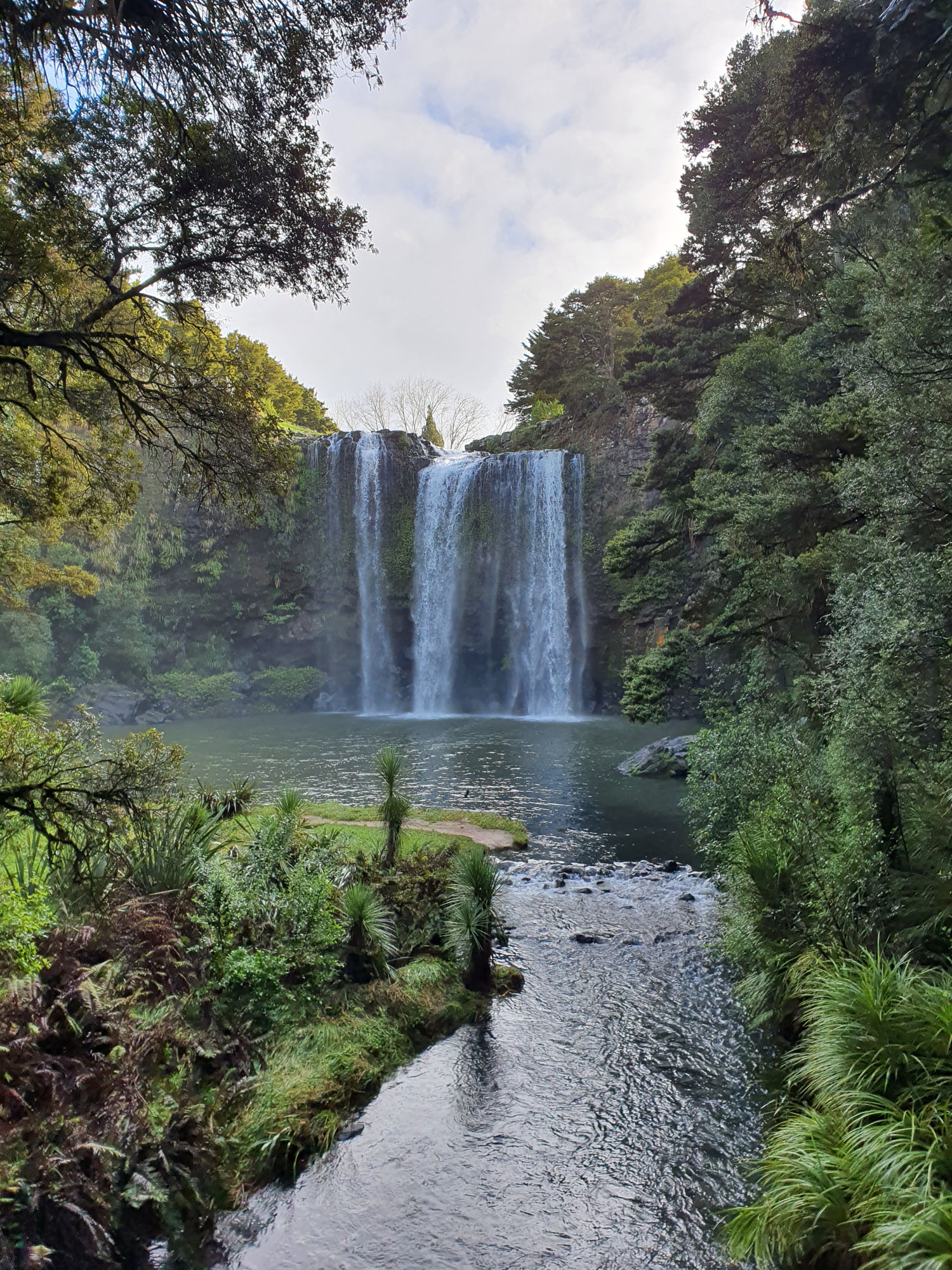
Otuihau Whāngārei Falls is one of Whāngārei’s most-loved natural attractions and one of the few genuinely spectacular waterfalls you can reach without breaking a sweat. Located in the suburb of Tikipunga, just 10 minutes from the city centre, the falls drop 26.3 metres over a broad basalt cliff face into a wide plunge pool below, surrounded by native bush and the sound of tui overhead. Whether you’re visiting Whāngārei for a day or spending a week in the north, Otuihau is a stop worth making.
The Falls and the Reserve
The waterfall takes its Māori name Otuihau from its significance to local iwi. The plunge pool at the base was historically regarded as a healing area, used for washing the wounded. The site was purchased in the late 1920s by Archibald Clapham specifically to prevent commercial development, and became public reserve in 1958. That foresight is easy to appreciate when you’re standing at the base of the falls with bush rising on three sides.
The falls cascade over a basalt lava flow, giving the drop a wide, rectangular character rather than the narrow single-thread form common at many New Zealand waterfalls. At full flow the water fans out across much of the cliff face, which makes it particularly impressive to photograph from the bridge below. The reserve around the falls is home to native birds including tui, kūkupa (native pigeon), and piwakawaka (fantail), and ducks are often seen on the plunge pool.
Getting There and Parking
The falls are located off Ngunguru Road in Tikipunga, about 6 km north of the Whāngārei city centre. The easiest route is via State Highway 1 heading north through Whāngārei. The falls are well signposted from SH1 on the right-hand side, so follow the brown signs and you will not need to pass through the city centre at all. Turn into Boundary Road and the car park entrance is clearly marked from there. The drive takes around 10 minutes from the central city.
There is a free public car park off Boundary Road right at the reserve entrance. It accommodates standard vehicles and campervans, though it can fill up during summer weekends and public holidays. Arriving before 10am on busy days is the best way to secure a spot close to the falls. Overflow parking is limited, so a weekday visit is preferable if you have flexibility. Freedom camping in self-contained vehicles is permitted in designated areas within the reserve for one night. Look for the relevant signage on arrival.
The Loop Track
The Otuihau Whāngārei Falls loop track is graded 2 and takes around 30 minutes to complete. The full circuit is 1 km on a well-surfaced path with one flight of steps leading down to the base of the falls. It is suitable for most visitors, though the steps mean it is not fully accessible for prams or wheelchairs. A wheelchair and pram-accessible viewing platform at the top of the falls offers good views without needing to descend.
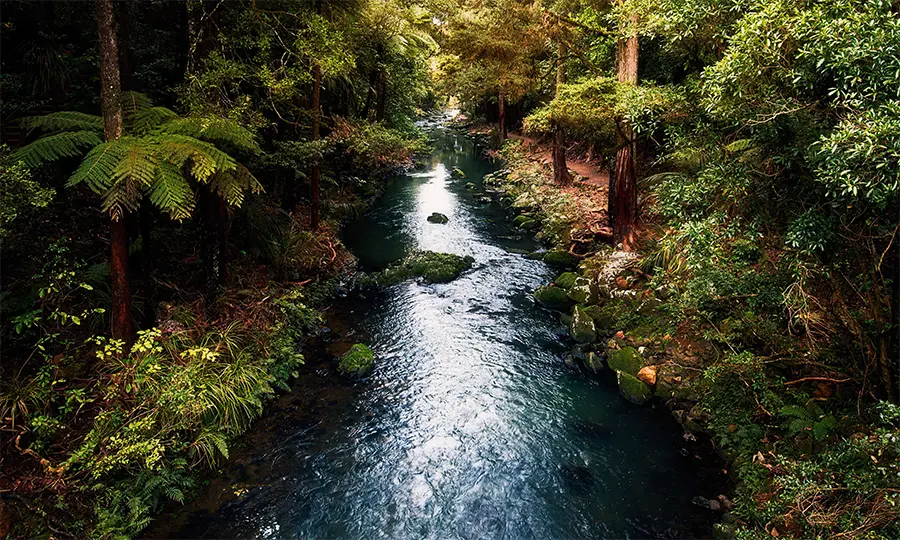
The track starts at the car park and crosses the river above the waterfall via a metal bridge. Note that this bridge has no handrail by design, as it is built to allow floodwater to flow over it during high water events. Take care when crossing, especially with young children or in wet conditions. From here the track descends through native bush to the base of the falls, where there is a picnic table and a viewing area looking directly up at the drop. A second bridge spans the river below the falls and offers some of the best photography angles on the site. The track then climbs back up to the car park to complete the loop.
Longer Walks
The Sands Road Loop extends the outing to a 4.8 km one-way walk (graded 3, approximately 3 hours). It also starts from the car park, crosses the road bridge, and follows Sands Road toward Ngunguru before connecting through to Clapham Road, A H Reed Memorial Kauri Park, and the Hātea River Walkway. The first section of Sands Road is unsealed but maintained for walkers. Be aware it can get muddy in wet weather, and the route includes a short stretch of road walking.
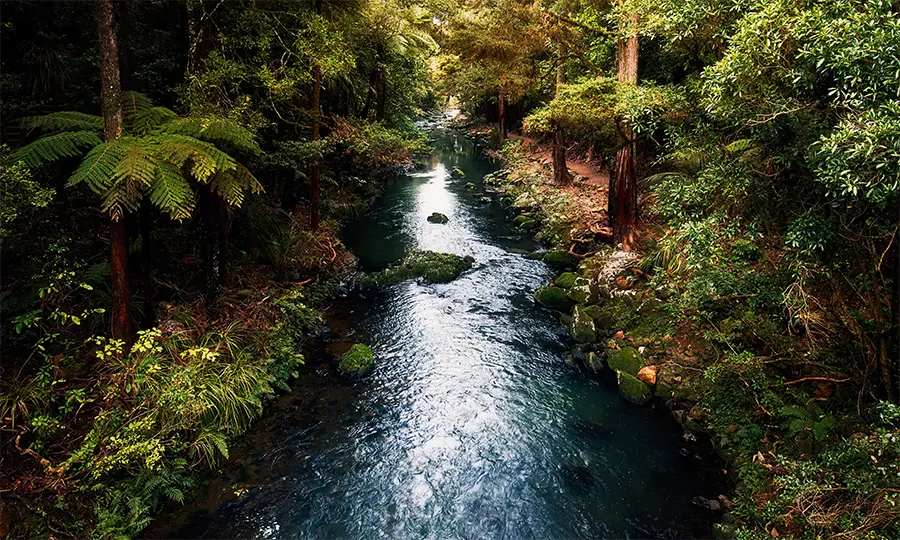
The Hātea River Walkway is a separate 6 km one-way track that runs from the Whāngārei Town Basin to the falls, following the river through parks, bush reserves, and boardwalks. It is a popular choice for those wanting a longer walk with the falls as the destination.
Please note: The swing bridge over the Hātea River at A H Reed Memorial Kauri Park is currently closed following a safety inspection and is not due to reopen until autumn 2027. Check the Whāngārei District Council website for current status before planning any walk that passes through this area.
Swimming at Otuihau
Swimming at the plunge pool is not an officially designated activity at Otuihau and signage at the site advises against it. The pool is unpatrolled, depths vary, submerged rocks are present, and currents can be stronger than they appear from the viewing area. Some visitors do swim there, but it is important to understand the risks before entering the water.
Water quality at the falls is monitored weekly by the Northland Regional Council from December through to the end of February. Results are available through the LAWA (Land, Air, Water Aotearoa) website, with predictions updated every 15 minutes. As a general rule, avoid entering the water for two to three days after heavy or prolonged rainfall, as rain washes contaminants from the surrounding urban and rural catchment into the river. Always check the current LAWA status before swimming.
The Falls After Rain
Otuihau is worth visiting at any time of year, but the falls are at their most dramatic after heavy rain. The volume of water increases significantly following a storm, turning the broad basalt face into a thundering curtain of white water. The sound and spray at the base are noticeably more intense, and the plunge pool runs brown with sediment washed down from the catchment above. If there has been significant rainfall in the days before your visit, it is worth making the trip just for this.
The trade-off is that the track can be slippery in wet conditions, and the bridge at the top may be impassable when water levels are elevated, as it is designed to allow floodwater to flow over it. The Sands Road Loop track also gets muddy after rain. Wear appropriate footwear and stay on the marked path. If the river is running high and fast, do not attempt to cross at any point other than the designated bridges.
Facilities
The reserve is well set up for a comfortable visit. Public toilets are located in the middle of the horseshoe-shaped car park, easy to find on arrival. The grassy area around the reserve has multiple picnic tables and seating, including a picnic table at the base of the falls itself. A BBQ is available on site. There is no cafe or food outlet at the falls, so bring your own supplies. The closest option is a dairy about 5 to 10 minutes walk away on the corner of Meadow Park Crescent and Kiripaka Road. Otherwise the nearest petrol station and shops are a short drive away.
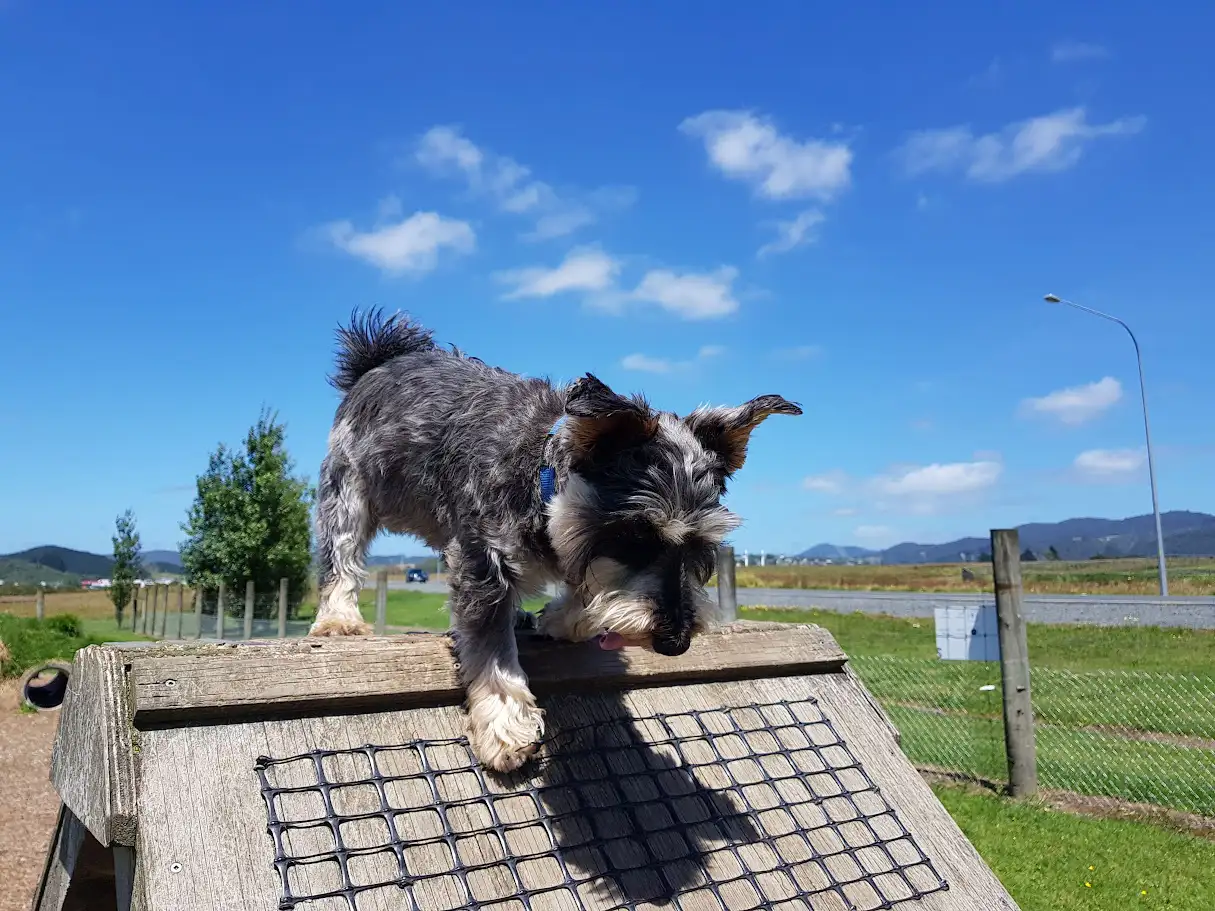
Dogs are welcome on leash throughout the falls reserve, making it a good outing for owners wanting a scenic walk with their dog. The loop track and surrounding grassy areas are well suited to dogs, provided they are kept under control at all times. Be aware that dogs are not permitted in the adjacent A H Reed Memorial Kauri Park if you are extending your visit to include that area, so plan accordingly if you are bringing a dog and intending to walk further afield.
Practical Tips
Early morning is the best time to visit for quieter tracks, better birdlife, and softer light for photography. Peak summer weekends bring the biggest crowds, and parking fills quickly. A weekday morning visit during the school holidays will give you the place more or less to yourself.
The short loop track means Otuihau is suitable for all ages and fitness levels. Wear closed-toe shoes with grip, particularly if visiting after rain. Bring water, sun protection, and insect repellent in the warmer months. There are rubbish bins on site, but taking your rubbish with you is always the better option.
Nearby Attractions
A H Reed Memorial Kauri Park is a short drive or walk away and is home to some of the finest remaining kauri trees in the district, including specimens estimated to be over 500 years old. The canopy walk through the park is a favourite with families. Check the Whāngārei District Council website for current track access information before visiting.
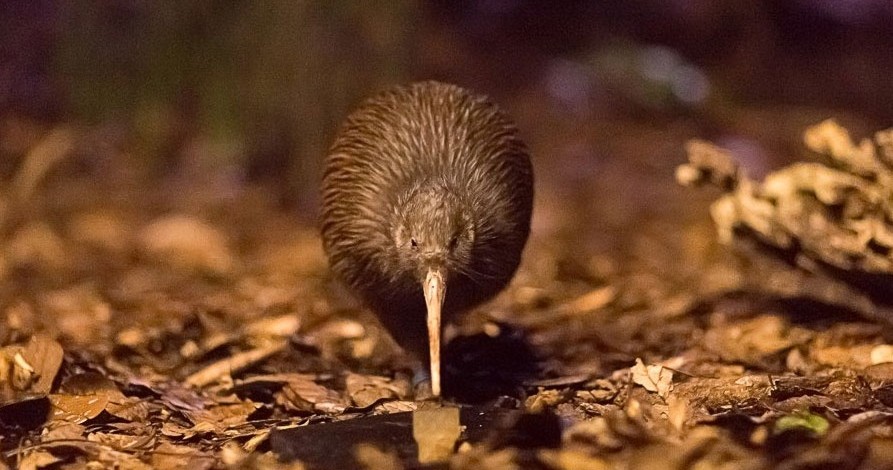
Mair Park, further along the Hātea River toward the city, offers additional bush walks and picnic areas. The Whāngārei Town Basin is around 10 minutes by car and provides cafes, restaurants, the Hundertwasser Art Centre, Clapham’s National Clock Museum, and the starting point of the Hātea Loop Walkway. For families, Kiwi North is also well worth a visit, with live kiwi, a historic village, and the Whāngārei Museum all on the one site.